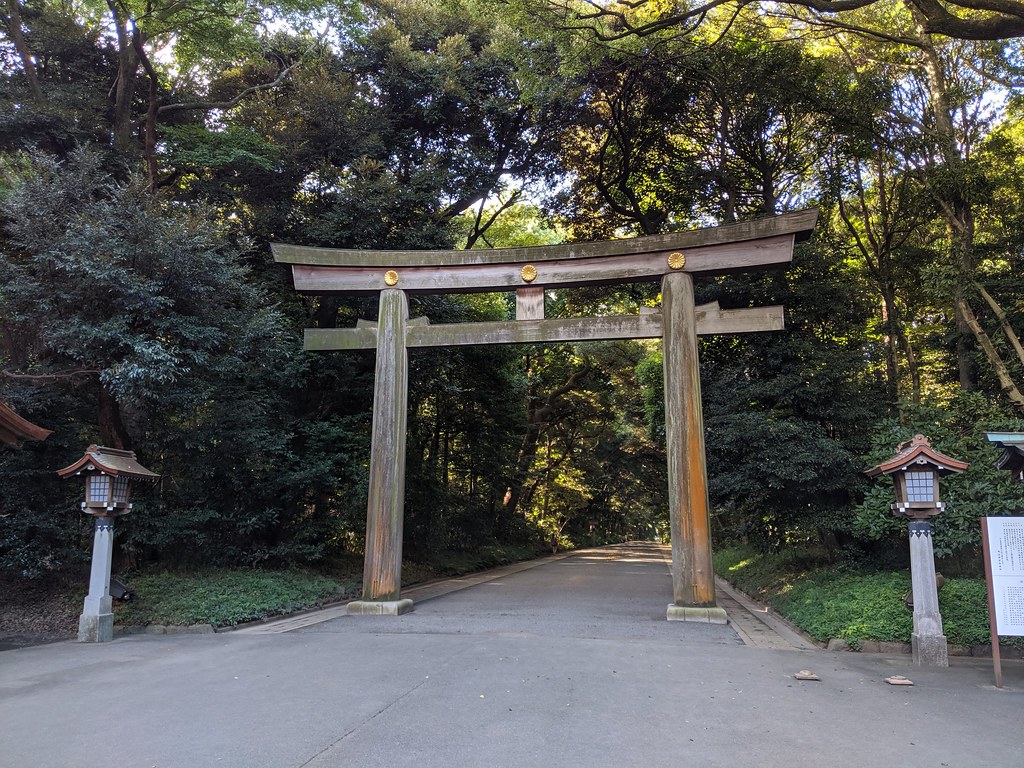
Meiji Jingu Shrine (明治神宮)
Meiji Jingu is Tokyo's foremost Shinto shrine, enshrining Emperor Meiji and Empress Shoken inside a 70-hectare urban forest. Established in 1920, it draws millions of visitors year-round — and over 3 million for New Year prayers alone — offering a serene forest escape steps from Harajuku.
Key facts
| Hours | Hours not verified |
|---|---|
| Price | free |
| Phone | — |
| Website | — |
| Nearest transit | Harajuku Station (JR Yamanote Line) — 1-min walk to shrine entrance; Meiji-jingumae 'Harajuku' Station (Tokyo Metro Chiyoda & Fukutoshin Lines) — 5-min walk. Also accessible from Sangubashi Station (Odakyu Line) — 3-min walk. |
| Time needed | 1 hour for shrine only; 2 hours adding Inner Garden or Museum; up to 3 hours for all areas |
| Best time to go | Early weekday mornings at opening (sunrise) for near-solitude on the gravel path; avoid first three days of January (3 million+ hatsumode visitors) and weekend middays |
| Last verified | July 12, 2026 |
Locals Score
- Value9.0
- Freshness5.9
- Crowd level7.0
- Authenticity9.0
- Accessibility9.0
Frequently asked questions
- How do I get to Meiji Jingu by train?
- The easiest access is Harajuku Station on the JR Yamanote Line — the shrine entrance is a 1-minute walk from the west exit. Tokyo Metro's Chiyoda and Fukutoshin lines stop at Meiji-jingumae 'Harajuku' Station, about 5 minutes away. The Odakyu Line's Sangubashi Station is a 3-minute walk to the Sangubashi entrance, which offers a quieter approach.
- Is there an admission fee to enter Meiji Jingu?
- Entry to the main shrine grounds and forest paths is completely free. The Inner Garden (Gyoen) charges a ¥500 maintenance contribution, and the Meiji Jingu Museum charges ¥1,000 for adults and ¥900 for high-school students or younger. No ticket is needed to walk the approach or pray at the main hall.
- What is the Meiji Jingu Museum?
- The Meiji Jingu Museum opened in 2019 and was designed by renowned architect Kuma Kengo. It displays personal artifacts of Emperor Meiji and Empress Shoken across two floors of 3,200 square meters, including writing utensils, furniture, and the imperial carriage of 1889. Hours are 10:00–16:30 (last admission 16:00), closed Thursdays; admission is ¥1,000 for adults.
- Can I see a traditional Shinto wedding at Meiji Jingu?
- Yes — Meiji Jingu is one of Tokyo's most popular venues for traditional Shinto weddings, and processions can often be spotted, especially on weekend mornings. Visitors are welcome to observe quietly from a respectful distance, but should not photograph the wedding party up close or use flash. There is no schedule published in advance.
- What are Meiji Jingu's opening hours?
- The shrine opens at sunrise and closes at sunset every day of the year, so exact times shift monthly — e.g., around 6:40 in January and later in summer. There are no fixed clock hours for the main grounds; check the official site (meijijingu.or.jp) for the current month's schedule. The Inner Garden and Museum keep shorter, fixed hours.
- What is the prayer etiquette at Meiji Jingu?
- The standard Shinto ritual is: bow once at the torii gate, walk along the sides of the path (the center is reserved for the deity), rinse your hands at the temizuya purification fountain, then at the main hall offer a coin, bow twice, clap twice, pray silently, and bow once more. This 'two bows, two claps, one bow' sequence is the core etiquette.
- Is there a dress code at Meiji Jingu?
- There is no strict dress code for general visitors — normal casual clothing is acceptable. The shrine itself advises dressing appropriately as you are greeting a deity, so smart-casual and modest attire is recommended. Avoid beachwear, overly revealing clothing, or workout gear out of respect for the active place of worship.
- What is the Meiji Jingu Inner Garden and is it worth visiting?
- The Inner Garden (Meiji Jingu Gyoen) is a traditional Japanese garden within the shrine grounds, famous for around 1,500 iris bulbs of 150 varieties that bloom spectacularly in mid-June. It also contains Kiyomasa's Well, a revered natural spring considered a 'power spot.' Entry costs ¥500 and hours differ from the main shrine, so check the official site before visiting.
Nearby in Ask Tokyo
- Meiji ShrineAttraction0.03 km · 0 min walk
- Yoyogi Park (代々木公園)Park0.62 km · 8 min walk
- CAFE REISSUECafé0.96 km · 12 min walk
- Fuunji (風雲児)Restaurant1.08 km · 13 min walk
- Coffee PUNKTOCafé1.19 km · 15 min walk
Where to stay near Meiji Jingu Shrine (明治神宮)
Compare hotels & stays on Booking.com · doesn’t affect the Locals Score