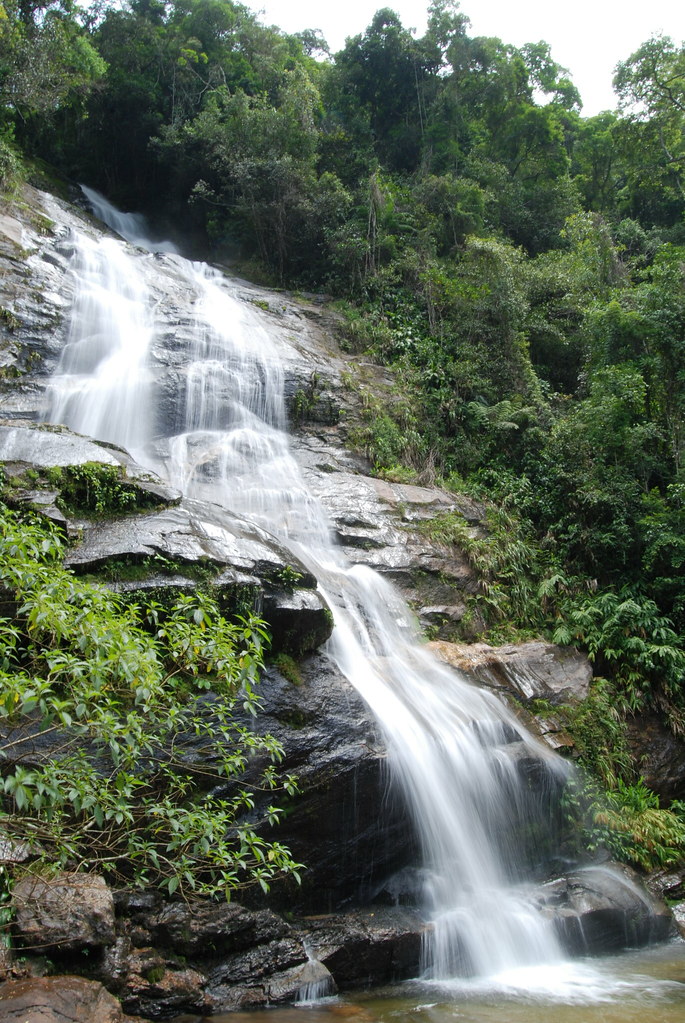
Tijuca National Park
8.0Locals Score / 10#4 of 11 Parks & Outdoors in Rio de Janeiro
Known fortijuca foresturban rainforesthikingwaterfalls
One of the world's largest urban rainforests — a replanted 19th-century forest that now wraps Rio in waterfalls, monkeys, and hiking trails, all free and open daily. The Floresta sector's trails and Cachoeira do Horto swimming hole are the draw beyond Christ. Caveat: no real public transit into the forest sectors — you'll need a ride app, car, or guided hike.
Key facts
| Hours | Daily 08:00–17:00 |
|---|---|
| Price | free |
| Phone | — |
| Website | — |
| Nearest transit | None practical into the forest core — ride app or taxi to the Alto da Boa Vista or Horto entrances; guided tours include transport |
| Time needed | Half a day |
| Best time to go | Dry-season mornings (May-September); weekdays for near-empty trails |
| Last verified | July 12, 2026 |
Locals Score
8.0/10- Value9.0
- Iconic8.0
- Freshness5.9
- Crowd level8.0
- Authenticity8.5
- Accessibility4.5
Frequently asked questions
- Can I swim at the waterfalls in Tijuca?
- The Cachoeira do Horto area has natural pools locals cool off in, and the Floresta sector's Cascatinha Taunay is the big photogenic fall (viewing only). Water flow varies by season — after dry spells the pools shrink. Weekdays beat the weekend crowds.
- Does Tijuca National Park cost anything?
- The forest itself is free, open daily roughly 8am to 5pm. The only paid thing inside is Christ the Redeemer's Corcovado sector, which has its own tickets. Waterfalls, trails, and picnic areas cost nothing.
- Is it safe to hike alone in Tijuca?
- The main marked trails (Pico da Tijuca, Cascatinha area) are regularly walked and fine in daylight; remote trails have had occasional robbery reports over the years, so for lesser-known routes go in a group or hire a guide. Always start early and be out well before dusk.
- Is Christ the Redeemer inside Tijuca National Park?
- Yes — the statue sits in the park's Corcovado sector, and the train ride up passes through the forest. But the Floresta and Pedra Bonita/Pedra da Gávea sectors are entirely different experiences: actual trails, waterfalls, and almost no tour buses.
- What's the best hike in Tijuca National Park?
- Pico da Tijuca — Rio's second-highest summit at 1,021m, about two to three hours round trip from the Floresta entrance on a well-marked trail with a final rock-carved staircase and a 360° view over the whole city. Bring water and start by mid-morning.
- What wildlife will I see in Tijuca National Park?
- Capuchin monkeys and marmosets are near-guaranteed, plus toucans, coatis, agoutis, and spectacular butterflies. It's a replanted forest — a massive 1860s reforestation project — that wildlife recolonized, which makes it one of the great urban ecology stories anywhere.
- How do I get into Tijuca National Park?
- Ride app or taxi to the Floresta entrance at Praça Afonso Viseu in Alto da Boa Vista, or to the Horto trailheads behind the Botanical Garden. There's no useful metro or bus into the forest core, which is exactly why it stays quiet.
- What is Pedra Bonita and is it in the park?
- Yes — Pedra Bonita is the park's easiest big-view hike, around 40 minutes up from the São Conrado side to a huge granite platform, sharing its trailhead with Rio's famous hang-gliding ramp. If Pico da Tijuca sounds like too much, this is your hike.
Nearby in Ask Rio de Janeiro
- Parque Nacional da Tijuca (Tijuca National Park)Attraction0.72 km · 9 min walk
- Parque Natural Municipal Paisagem CariocaPark5.3 km · 66 min walk
- Parque da Cidade (Gávea)Park5.3 km · 66 min walk
- São Conrado BeachBeach5.42 km · 68 min walk
- Braseiro da GáveaRestaurant6.08 km · 76 min walk
Where to stay near Tijuca National Park
Compare hotels & stays on Booking.com · doesn’t affect the Locals Score