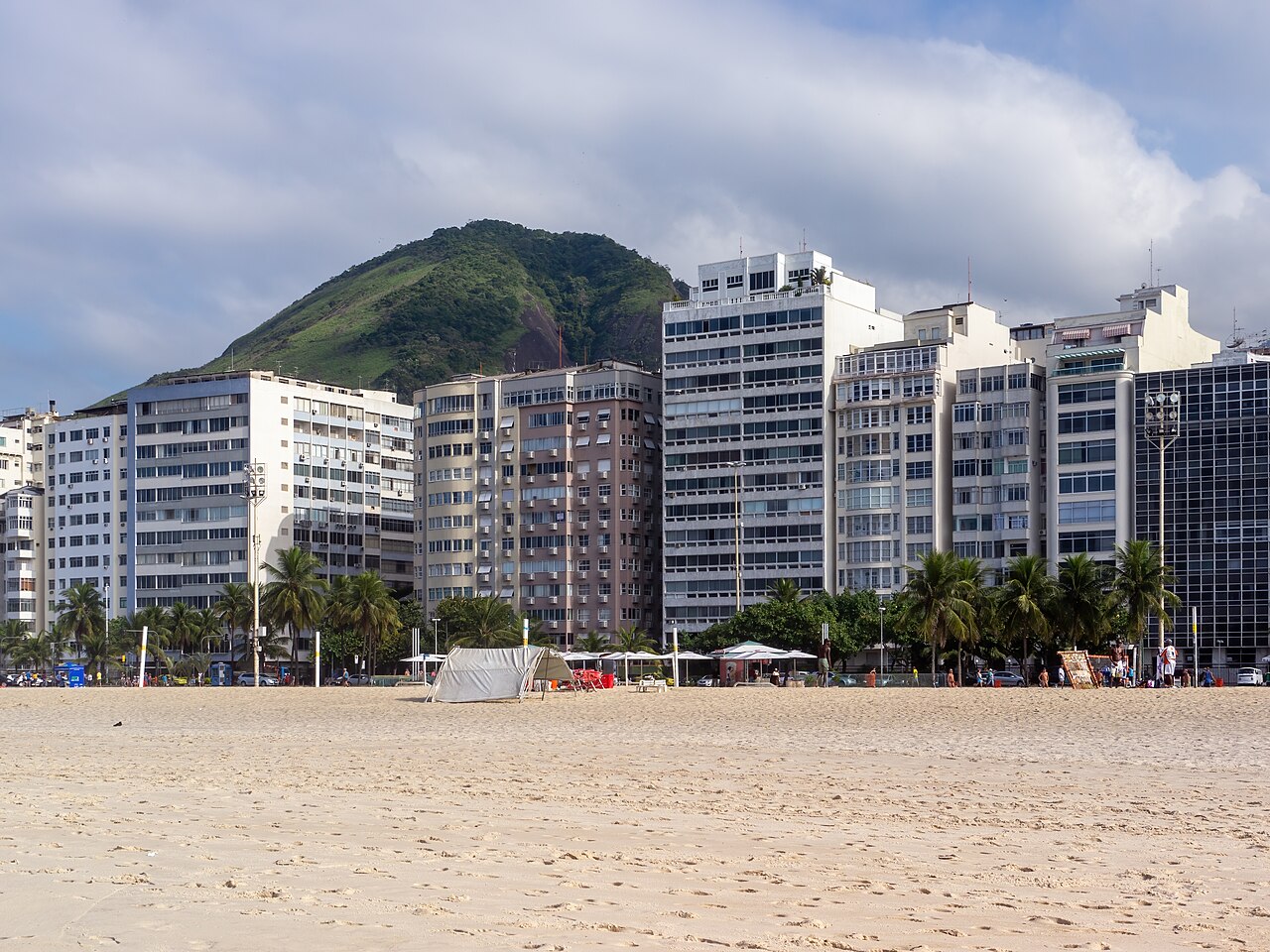
Copacabana
7.7Locals Score / 10$$
Known forcopacabanabeachboardwalknightlife
Copacabana is the world's most famous beach and it earns it: 4 km of sand, the mosaic boardwalk, kiosks, and a genuinely mixed local-tourist crowd. It's also the Zona Sul's scrappiest neighborhood — dense, noisy, and where most petty theft on the sand happens. Go for the beach and the fort; keep your phone close.
Key facts
| Hours | Hours not verified |
|---|---|
| Price | $$ |
| Phone | — |
| Website | — |
| Nearest transit | Cardeal Arcoverde, Siqueira Campos, and Cantagalo metro stations (Line 1, R$7.90) |
| Time needed | Half a day for the beach and fort; many visitors base themselves here for days |
| Best time to go | Weekday mornings for calm sand; late afternoon at the fort end for the classic curve view; December 31 for the famous Réveillon if you can handle 2 million people |
| Last verified | July 12, 2026 |
Locals Score
7.7/10- Value7.5
- Iconic8.0
- Freshness5.9
- Crowd level4.5
- Authenticity7.5
- Accessibility9.5
Frequently asked questions
- How much do beach chairs and caipirinhas cost on Copacabana?
- Kiosks and barracas rent chairs and umbrellas for a modest daily fee and sell drinks and snacks — prices are posted, but confirm before you order, especially on the beachfront kiosks where tourist markups happen. Agree on prices first and check your bill.
- Can you swim at Copacabana?
- Yes — the water is Atlantic and generally clean, though check the flags: rips can be strong and lifeguards are serious about red flags. Swim near the postos, and note water quality dips after heavy rain.
- What's Réveillon in Copacabana like?
- New Year's Eve on the beach draws around two million people dressed in white, with fireworks off barges — one of the world's great parties. Book accommodation months ahead, expect closed roads and packed metro, and go with almost nothing in your pockets.
- Copacabana or Ipanema — where should I stay?
- Copacabana has more hotels, lower prices, and three metro stations; Ipanema is calmer, prettier, and pricier. If budget matters, stay in Copacabana near Cantagalo or Arcoverde stations and walk to Ipanema in 15 minutes. Best of both.
- Is Copacabana safe?
- It's the neighborhood where visitors most often get phones snatched, especially on the sand and the beachfront at dusk. Take nothing to the beach you can't afford to lose, use kiosk lockers or take turns swimming, and avoid the dark sand at night. The inland streets are busy and fine with normal care.
- Is Copacabana beach worth it or too touristy?
- Both. Yes it's touristy, but cariocas genuinely use this beach — each numbered posto (lifeguard tower) has its own crowd, from families to volleyball diehards. It's an icon that still functions as a real city beach, which is rare.
- What is the Forte de Copacabana and how much does it cost?
- A 1914 fort on the rocky southern point with the single best view back along the beach's curve. Entry is R$10 (half price for students and 60+), open Tuesday-Sunday 10:00-19:00, closed Mondays. The Colombo café branch inside is a lovely spot for coffee with that view.
- What is the Copacabana boardwalk pattern?
- The black-and-white Portuguese-stone wave pattern (calçadão), redesigned by Roberto Burle Marx in the 1970s. It runs the full 4 km and is the neighborhood's signature — walk or rent a bike along it early morning when locals exercise and the light is best.
Nearby in Ask Rio de Janeiro
- Copacabana BeachBeach0.03 km · 0 min walk
- Rio Carnival for First-Timers: What to KnowAttraction0.54 km · 7 min walk
- Pavão AzulBar0.62 km · 8 min walk
- Churrascaria PalaceRestaurant0.66 km · 8 min walk
- Adega PérolaBar0.78 km · 10 min walk
Where to stay near Copacabana
Compare hotels & stays on Booking.com · doesn’t affect the Locals Score