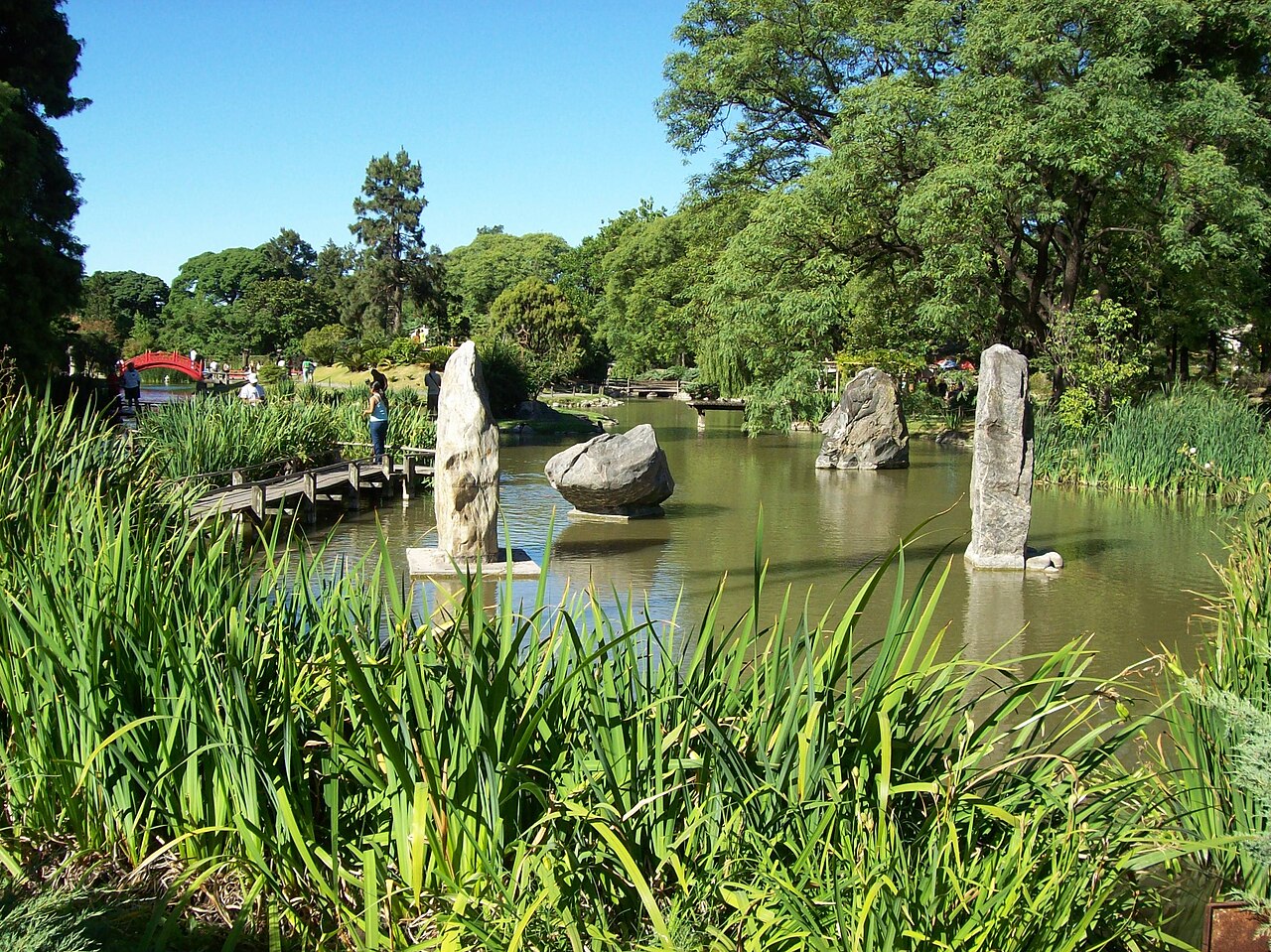
Jardín Japonés
7.4Locals Score / 10#11 of 11 Parks & Outdoors in Buenos Aires
Known forjapanese gardenkoi pondsbonsaitea house
One of the largest Japanese gardens outside Japan, built by the Japanese-Argentine community in 1967 — koi ponds, red bridges, bonsai, and a proper tea house inside the Palermo parks. It's small, pretty, and calming rather than mind-blowing. Non-residents pay about ARS 13,500 (a few US dollars); locals debate whether it beats the free parks around it.
Key facts
| Hours | Daily 10:00–19:00 |
|---|---|
| Price | $ |
| Phone | — |
| Website | — |
| Nearest transit | Buses along Av. Libertador and Av. Casares; Subte D (Plaza Italia or Scalabrini Ortiz) ~15-minute walk |
| Time needed | 45 minutes to 1.5 hours |
| Best time to go | Weekday mornings at opening for tranquility; cherry blossom weeks (late winter/early spring) are lovely and busiest |
| Last verified | July 12, 2026 |
Locals Score
7.4/10- Value7.0
- Iconic6.0
- Freshness5.9
- Crowd level6.0
- Authenticity7.0
- Accessibility8.0
Frequently asked questions
- Is there a restaurant inside?
- A proper Japanese restaurant and tea house overlooks the pond — sushi, ramen, and tea service run by the cultural foundation. It's decent and the setting is the point. There's also a shop with bonsai, seeds, and Japanese groceries.
- Is the Jardín Japonés worth it compared to the free parks around it?
- Honest take: if you love Japanese gardens or want an hour of genuine quiet, yes — it's carefully kept and the koi ponds and bonsai collection are real. If you're park-hopping on a tight schedule, the free Rosedal next door delivers more spectacle per hour.
- How much does the Jardín Japonés cost?
- Non-residents pay about ARS 13,500 (Argentine residents ARS 4,500 with DNI; under-12s, seniors with residency, and visitors with disabilities free). Prices adjust with inflation, so treat those as close-not-exact. It's a few US dollars — not a budget decision.
- How did Buenos Aires get a major Japanese garden?
- The Japanese-Argentine community built it in 1967 for a state visit by Japan's then-crown prince (later Emperor Akihito), and the Fundación Cultural Argentino Japonesa has run it since. It doubles as the community's cultural hub, with festivals, taiko, and workshops through the year.
- How do I get there and what pairs well with it?
- It sits at Av. Casares 3450 inside the Palermo parks — buses along Libertador drop you closest; from Subte Plaza Italia it's a 15-minute walk. Natural pairing: Rosedal and the lakes before, or MALBA after — everything's within a 20-minute walk.
- Can I feed the koi?
- Yes — fish food is sold on site and the carp mob anyone holding a bag, which is reliably the kids' highlight. Bring small bills or a card for the kiosk.
- When do the cherry blossoms bloom in Buenos Aires?
- Late winter into early spring — roughly August into September in Buenos Aires' flipped seasons, and the garden makes an event of it. Beautiful, but expect the year's biggest crowds and lines at the gate on peak weekends.
- What are the garden's hours?
- Open every day, including holidays, 10am to 7pm, with ticket windows closing around 6pm. Mornings right at opening are noticeably calmer than afternoons, especially on weekends.
Nearby in Ask Buenos Aires
- MALBA (Museo de Arte Latinoamericano de Buenos Aires)Museum0.57 km · 7 min walk
- Museo EvitaMuseum0.69 km · 9 min walk
- Bosques de Palermo (Parque Tres de Febrero)Park0.86 km · 11 min walk
- Palermo Parks & Rose Garden (Rosedal)Attraction0.93 km · 12 min walk
- Museo de Arte DecorativoMuseum1.07 km · 13 min walk
Where to stay near Jardín Japonés
Compare hotels & stays on Booking.com · doesn’t affect the Locals Score